
How to Prepare for the Future of Work
The workplace is evolving faster than ever. Artificial intelligence, automation, and digital transformation are reshaping industries, creating new opportunities—and new expectations—for today’s workforce. While technical knowledge remains important, employers are increasingly looking for professionals who combine digital skills with critical thinking, adaptability, and strong communication.
Whether you’re a student, recent graduate, or working professional, developing the right skills now can help you stay competitive in 2026 and beyond.
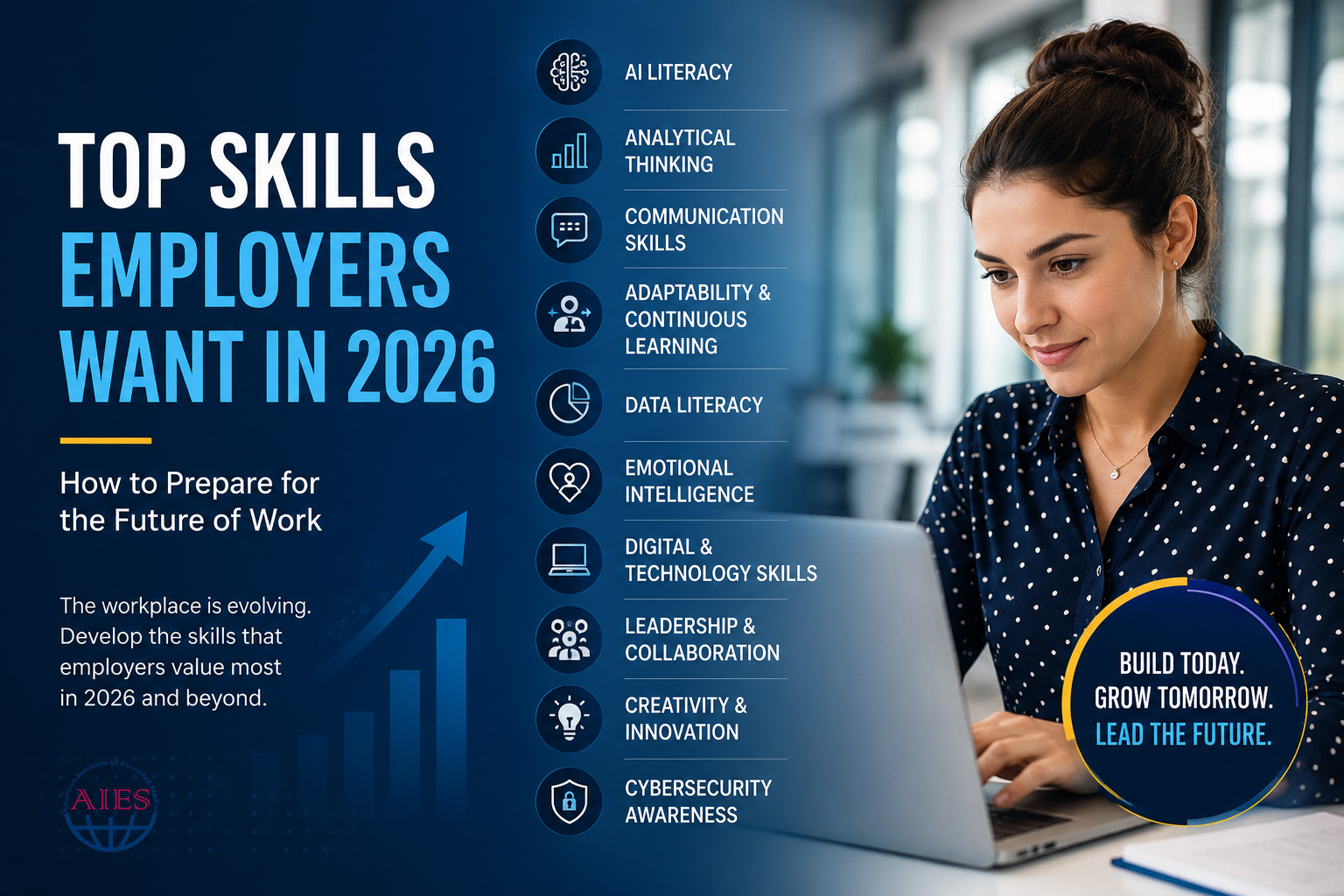
1. AI Literacy
Artificial intelligence is becoming part of everyday work across nearly every industry. You don’t need to be an AI engineer, but employers increasingly expect workers to understand how AI tools can improve productivity and decision-making.
AI literacy includes:
- Using AI responsibly to support daily work
- Writing effective prompts for AI assistants
- Evaluating AI-generated content
- Understanding AI’s strengths and limitations
Professionals who know how to collaborate with AI—not simply compete against it—will have a significant advantage.
2. Analytical Thinking
The ability to evaluate information, solve complex problems, and make informed decisions continues to rank as one of the most valuable workplace skills. As routine tasks become automated, employers increasingly rely on employees who can interpret data, identify patterns, and develop thoughtful solutions. The World Economic Forum continues to rank analytical thinking among the most sought-after workforce skills.
Ways to strengthen analytical thinking include:
- Practicing data interpretation
- Solving real-world business problems
- Learning basic statistics
- Asking deeper questions before making decisions
3. Communication Skills
Technology cannot replace effective communication.
Whether working remotely or in person, employers value professionals who can clearly explain ideas, collaborate with teams, and communicate across departments.
Strong communication includes:
- Professional writing
- Public speaking
- Active listening
- Presentation skills
- Cross-cultural communication
Good communication builds trust, improves teamwork, and leads to better business outcomes.
4. Adaptability and Continuous Learning
Technology changes quickly, and successful professionals are those who embrace lifelong learning.
Employers increasingly seek individuals who:
- Learn new software quickly
- Stay current with industry trends
- Welcome change
- Continuously develop new skills
Adaptability has become one of the strongest indicators of long-term career success in an AI-driven workplace.
5. Data Literacy
Data is now central to decision-making in nearly every profession.
Even if you don’t work as a data analyst, understanding how to interpret dashboards, reports, and performance metrics can make you a more valuable employee.
Useful skills include:
- Reading charts and graphs
- Understanding key performance indicators (KPIs)
- Working with spreadsheets
- Creating simple reports
- Making data-informed decisions
6. Emotional Intelligence
As AI handles more technical and repetitive tasks, human-centered skills become even more valuable.
Emotional intelligence includes:
- Empathy
- Self-awareness
- Relationship building
- Conflict resolution
- Leadership
Organizations recognize that employees with strong emotional intelligence create healthier teams and better customer experiences.
7. Digital and Technology Skills
Every industry now relies on technology. Employers value professionals who are comfortable learning new platforms and digital tools, including:
- Cloud collaboration software
- Project management platforms
- Cybersecurity awareness
- Productivity applications
- Digital collaboration tools
Technology literacy doesn’t require becoming a programmer—it means confidently using technology to solve problems and improve efficiency.
8. Leadership and Collaboration
Leadership is no longer limited to managers.
Companies increasingly seek employees who:
- Take initiative
- Support teammates
- Lead projects
- Mentor others
- Build positive workplace cultures
Strong leadership combined with teamwork creates organizations that adapt more effectively to change.
9. Creativity and Innovation
Artificial intelligence can generate ideas, but people still provide creativity, originality, and strategic direction.
Creative employees help organizations:
- Design new products
- Improve customer experiences
- Develop innovative solutions
- Identify business opportunities
Creativity remains one of the most important skills that AI enhances rather than replaces.
10. Cybersecurity Awareness
As businesses become more digital, protecting information has become everyone’s responsibility.
Basic cybersecurity knowledge includes:
- Recognizing phishing attempts
- Creating strong passwords
- Protecting sensitive information
- Following organizational security policies
Even employees outside of IT play an important role in keeping organizations secure.
Preparing for the Future
The future of work isn’t about choosing between technical skills and human skills—it’s about developing both.
Research from global organizations shows that employers increasingly value professionals who combine AI and technology skills with analytical thinking, communication, adaptability, and leadership. Companies are hiring people who can work alongside AI while contributing the judgment, creativity, and interpersonal skills that technology cannot replace.
At AIES, we believe lifelong learning is the key to career success. By continuously developing your knowledge, embracing new technologies, and strengthening essential workplace skills, you’ll be well prepared for the opportunities that 2026 and beyond will bring.
The future belongs to lifelong learners—and there has never been a better time to start building the skills employers need most.